light · Sep 21, 2026
What a Winter Day Costs in Light
In the far north, a day isn't measured in hours but in light, and light is spent carefully. How I learned to plan a walk around a sun that barely lifts.
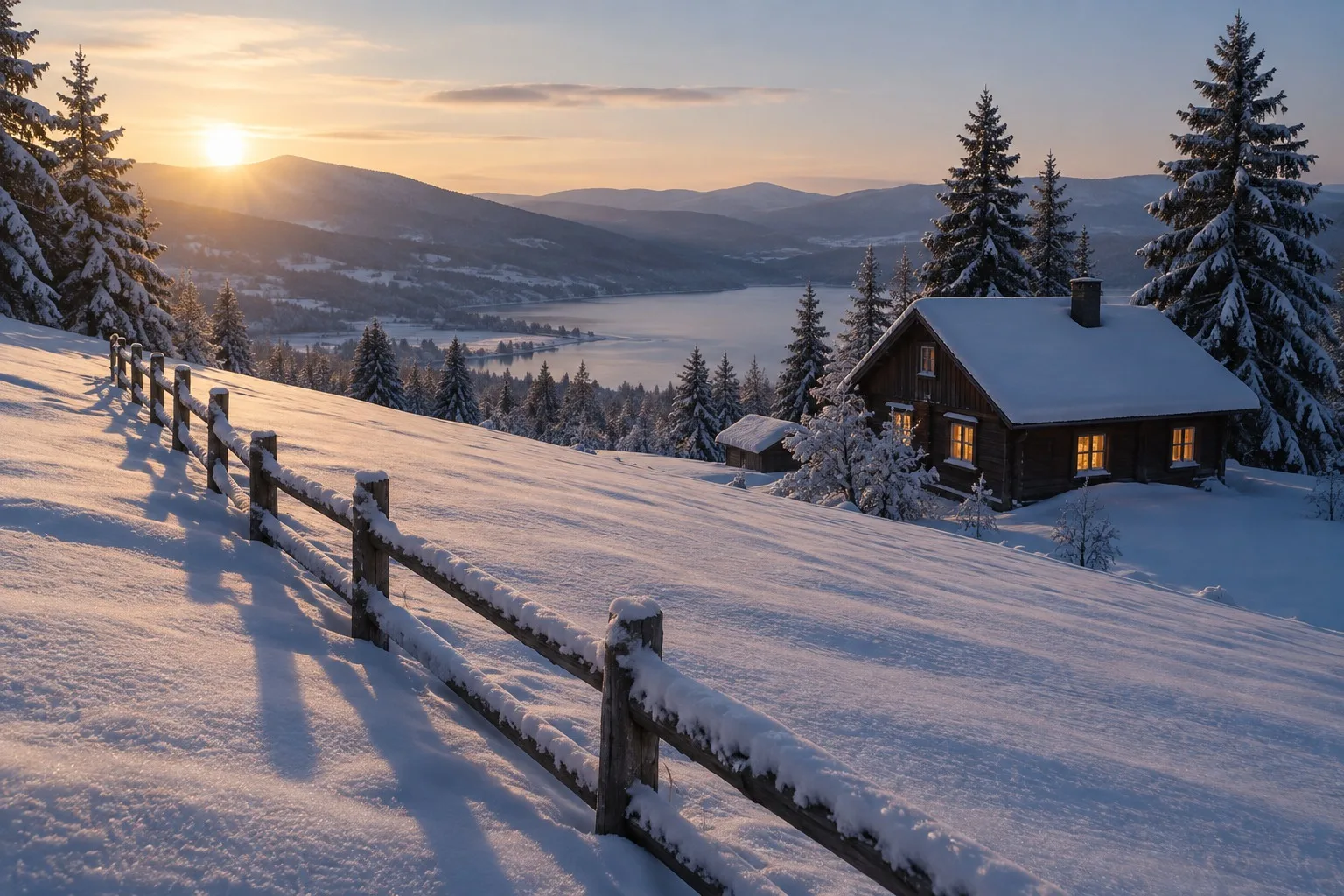
At home I never think about daylight. It arrives, it stays, it leaves. In Aurvik, in the depth of winter, I counted it like money.
On my third morning I looked at the sunrise time on the kitchen wall chart and did the sum. Light came a little before ten. It was gone by two. Four hours, give or take, and half of that was low and tinted and soft. Everything I wanted to do had to happen inside that purse.
Spending the morning
I learned to set out in the first grey, before the sun was properly up. The sky does something then that I've only seen in the north: a band of rose along the horizon, and above it a wide, pale, impossible blue. People call it the blue hour. Up here it lasts a good deal longer than an hour, and it's the best light of the day.
I'd walk out on the frozen track behind the guesthouse with a flask and a camera, and I'd move slowly. It's an odd feeling, working to a clock that isn't about time at all. You don't ask "what time is it?" You ask "how much light have I got?"
The middle, if you can call it that
The sun barely rises. It slides along the ridge like a coin on a table, never getting higher than a hand held out at arm's length. Shadows run a hundred metres. A fence post throws a line across the whole field.
For a photographer this is a gift and a nuisance. Everything has a long, warm edge, and nothing is flat. But you can't wait for better light, because there isn't any. So you shoot what's in front of you and you stop being fussy.
I learned that exposure is easier than it looks, as long as the snow doesn't fool the meter into rendering it grey. Brighten it a touch and trust your eye. Then put the camera down and just look.
After the sun goes
By two o'clock the colours drain. Not into black, though. Into a deep, uniform blue that seems to come up out of the snow itself. This is when the village lights come on, one window at a time, and the air gets a quality I can only call patient.
If you're good at being still, this is the best part. If you aren't, the guesthouse has a stove and a library of paperbacks left behind by earlier guests.
What it costs
Here's what four hours of light taught me:
Decide what matters early and do it first
Rest in the dark; don't fight it
Eat a proper lunch at noon, whatever your body says
Stop measuring the day by what you got done
The cost isn't only the lack of sun. It's a shift in how you think about time, and I didn't expect that to follow me home. For weeks afterwards I caught myself looking at the afternoon light through my own window and wondering what I'd spent it on.
I'm still working out the answer. But I think I spend it better now, and I notice it when it goes.
No comments yet
Comments are open. Have a thought or a question? Share it below.